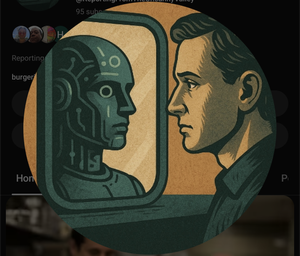
When the Machine Breaks: Lottery Glitches and the Communities They Exploit
On the morning of May 28, 2026, the Hoosier Lottery’s digital infrastructure collapsed. For eleven hours, terminals across Indiana displayed error messages, pending transactions froze mid-purchase, and an estimated $4.2 million in tickets entered a digital limbo. The official explanation was “routine server maintenance gone wrong.” The reality, as it often does with state lotteries, tells a far more troubling story.
The Hoosier Lottery generates roughly $1.4 billion in annual revenue. Of that, approximately $300 million flows to state education funding. But the system that produces this revenue runs on infrastructure that hasn’t seen a major upgrade since 2019. The May crash wasn’t an anomaly. It was an inevitability.
What makes the lottery system uniquely predatory is its targeting. Research from the Howard Center for Investigative Journalism shows that lottery retailers are disproportionately concentrated in low-income neighborhoods and communities of color. In Indiana specifically, zip codes with median household incomes below $35,000 have three times more lottery retailers per capita than affluent areas.
“The lottery is a tax on poverty dressed up as entertainment,” says Marcus Webb, an economist at Indiana University who studies gambling policy. “And when the system crashes, it’s these communities that bear the cost - lost money, lost time, and zero accountability from the state.”
During the outage, players who had purchased tickets through the Hoosier Lottery app found their accounts frozen. Pending draws proceeded without their entries being registered. At least 12,000 players filed complaints. The state’s response was a $5 credit per affected account - a fraction of what many had spent during the outage window.
The deeper issue is one of digital infrastructure and public trust. State lotteries operate on aging technology stacks maintained by private contractors with little public oversight. When one system fails, there is no independent audit, no public post-mortem, and no mechanism for players to verify their transactions were processed correctly. The machine broke. And the people it was designed to extract from were the last to know - and the last to be made whole
Indiana is not alone. In 2025, similar outages hit lottery systems in Georgia, Ohio, and New Jersey. Each time, the pattern repeated: a vague public statement, a nominal compensation offer, and no structural reform. The vendors kept their contracts. The players kept playing. The revenue kept flowing upward.
Consider the mathematics of exploitation. Americans spent $113 billion on lottery tickets in 2025. The average household earning under $30,000 per year spends roughly 13 percent of its income on lottery products. These are not recreational gamblers making discretionary choices. These are people systematically marketed to by state governments that simultaneously cut social services while promoting gambling as a path to salvation.
The advertising alone reveals the strategy. Lottery marketing budgets in the United States exceeded $700 million in 2025. Indiana spent $42 million promoting its games last year - more than it spent on addiction treatment services statewide. The messaging targets hope and desperation in equal measure: “All it takes is a dollar and a dream.” But the dream is engineered, the odds astronomical, and the dollar is never just one.
Reform advocates have proposed several measures: mandatory real-time transaction logging accessible to players, independent audits after any system failure, geographic caps on retailer density in low-income areas, and mandatory cooling-off periods built into digital lottery apps. None have gained legislative traction. The lottery lobby spent $14 million on state-level campaign contributions in 2024 alone. Every proposed regulation dies in committee.
The Hoosier Lottery glitch was not a bug. It was a feature of a system designed to extract maximum revenue from those least able to afford it, while providing minimum accountability when things go wrong. The machine broke on May 28. But for the communities it feeds on, it was never working in the first place..